

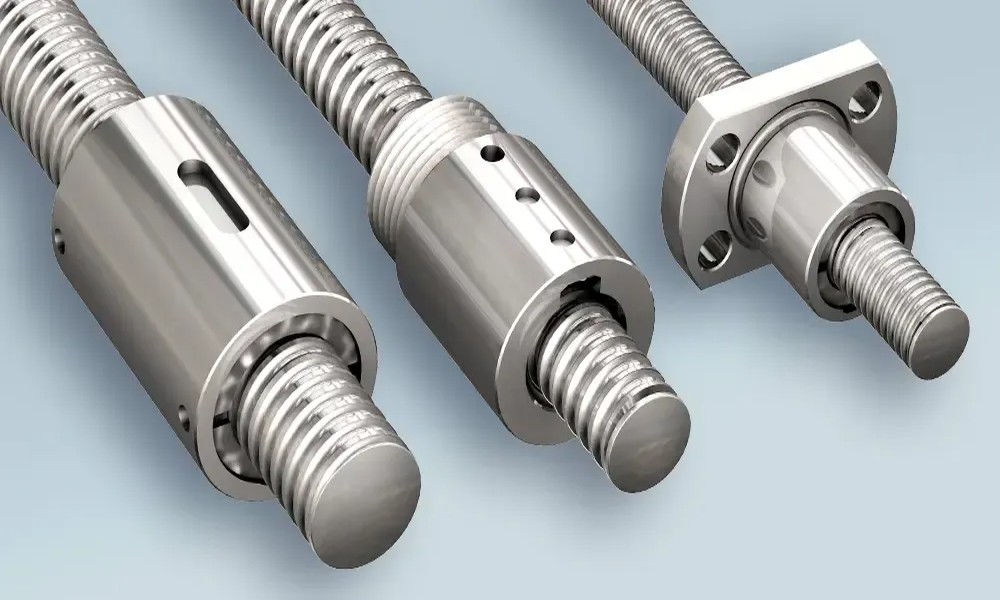
One of the most sought-after solutions in modern machinery is the Ball screw (Model: BLR) (known in Thai as บอลสกรู BLR), a high-precision rotary-nut component designed to handle high speeds and complex load distributions. As industrial requirements become more specialized, a pivotal question arises: Should you opt for a standard off-the-shelf model, or is a fully customized solution necessary to achieve your operational goals?
Making the right choice involves balancing immediate availability and cost-efficiency against long-term mechanical optimization and the strategic longevity of your automation infrastructure.
1. Standard Models: The Efficiency of Off-the-Shelf Precision
For many industrial applications, the standard version of the Ball screw (Model: BLR) is the go-to choice due to its proven performance and immediate availability. Standard models are manufactured to universal industry specifications, ensuring they can be integrated into most conventional CNC machines and robotic arms without extensive modification.
Key Advantages of Standard Models:
Rapid Deployment and Availability: One of the most significant benefits of a standard Ball screw (Model: BLR) is the lead time. Since these units are kept in stock, they are ideal for urgent replacements or maintenance repairs, minimizing downtime that could otherwise cost a factory millions in lost productivity.
Cost-Effectiveness for Bulk Applications: Because they are produced in high volumes, standard models offer a lower initial investment. This makes them the preferred choice for projects with tight budget constraints or for systems where the mechanical demands do not exceed typical operating parameters.
Simplified Maintenance and Interchangeability: Using standard components means that sourcing replacement parts in the future is straightforward. The standardized dimensions and tolerances ensure that a technician can swap out a worn unit with an identical model from various suppliers, ensuring consistent system uptime.
Reliable Data and Performance Baselines: Standardized models have extensive documentation and historical performance data. This allows engineers to accurately predict the lifespan and load limits of the component, reducing the risk of unexpected mechanical failure under normal operating conditions.
Choosing the standard route is often a strategic decision for scalability, allowing businesses to expand their production lines quickly using reliable, well-documented components that require minimal engineering overhead.
2. Custom-Ordered Models: Tailored Solutions for Specialized Needs
While standard models cover a vast array of industrial needs, certain high-end or unique applications require a Ball screw (Model: BLR) that is specifically engineered for a particular environment or structural configuration. Customization allows for the optimization of length, end-machining, and material coatings to meet extreme technical demands.
Key Advantages of Custom-Ordered Models:
Precision End-Machining for Seamless Integration: In custom orders, the ends of the Ball screw (Model: BLR) are machined to your exact specifications. This is vital for systems with non-standard mounting brackets or unique housing designs, eliminating the need for bulky adapters that could introduce vibration or misalignment.
Optimized Length for Specific Machine Footprints: Standard screws come in set increments, but high-precision automation often requires a specific travel length to save space or weight. Customization ensures the screw fits the exact stroke requirements of the actuator, which is a “trick” to reducing the overall footprint of modern, compact machinery.
Specialized Material and Surface Treatments: If your machine operates in a high-corrosion environment (such as food processing or chemical plants) or a vacuum, a custom Ball screw (Model: BLR) can be manufactured with stainless steel or specialized ceramic coatings. These treatments provide superior resistance to wear and environmental stressors that would destroy a standard unit.
Advanced Lead and Pitch Configurations: Sometimes, the standard pitch (the distance the nut moves per revolution) is not ideal for the required speed or torque. Customizing the pitch allows engineers to fine-tune the mechanical advantage, ensuring the motor operates at its peak efficiency while maintaining micrometer-level positional accuracy.
Customization is a long-term investment in precision. While the initial cost and lead time are higher, the resulting component is perfectly harmonized with the machine, leading to reduced energy consumption and a significantly longer operational life in challenging industrial settings.
Deciding between a standard or a custom-ordered solution is a move that defines the future reliability of your production line. While standard models offer the “trick” to fast turnaround and cost control, customized versions provide the rigidity and specialization required for industry-leading innovation. Whether you are maintaining a legacy system or building a cutting-edge automated factory, selecting a high-quality Ball screw (Model: BLR) is the cornerstone of mechanical success.
At I.N.B, we understand that every industrial challenge is unique. We pride ourselves on being more than just a supplier; we are a strategic partner in your engineering journey. Our team of experts is ready to help you analyze your specific load requirements and environmental factors to determine which model best suits your needs. By choosing I.N.B, you are guaranteed components that meet the highest international standards for durability and precision.