

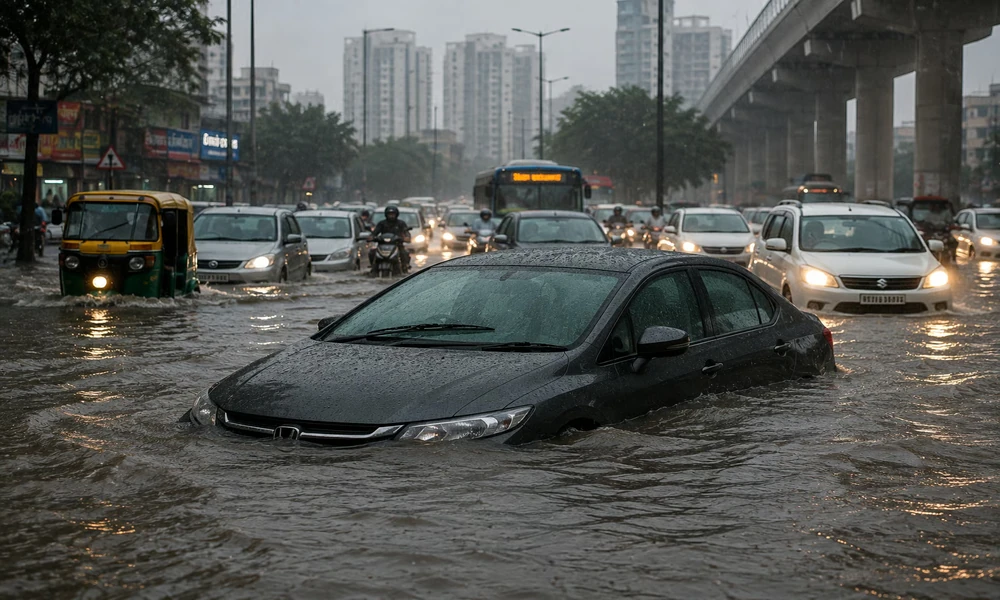
A car that stalls or fails to start after driving through floodwater may have water or moisture affecting its electrical system, ignition system, or engine air intake. The battery and electronic control components may also be affected. If water enters the engine cylinders, attempting to start the engine may cause a condition known as hydrolock, in which water prevents the pistons from moving normally. This can cause severe internal engine damage.
Floodwater may also affect the transmission, braking system, and electronic components. Even after the water recedes or the engine starts again, the vehicle may not be safe to drive because some damage may not be immediately noticeable. It is best to stop using the vehicle and have a qualified mechanic inspect it before driving again.
Why Won’t a Car Start After Driving Through Floodwater?
A car that stalls or fails to start after driving through floodwater may have water or moisture affecting its electrical system, ignition system, or engine air intake. The battery and electronic control components may also be affected. If water enters the engine cylinders, attempting to start the engine may cause a condition known as hydrolock, in which water prevents the pistons from moving normally. This can cause severe internal engine damage.
Floodwater may also affect the transmission, braking system, and electronic components. Even after the water recedes or the engine starts again, the vehicle may not be safe to drive because some damage may not be immediately noticeable. It is best to stop using the vehicle and have a qualified mechanic inspect it before driving again.
Car Won’t Start After Flooding? Avoid These 5 Mistakes!
If your engine stalls while driving through floodwater or your car will not start afterward, stay calm and avoid actions that could make the damage worse. Keep the following precautions in mind.
1. Do Not Attempt to Start the Engine Repeatedly
When the engine stalls after driving through floodwater, do not repeatedly turn the ignition key or press the start button. Even if you suspect moisture or a battery problem, water may have entered the air intake or engine cylinders. Attempting to restart the engine under these conditions can cause hydrolock, potentially damaging the connecting rods and other internal engine components.
Stop trying to start the engine immediately. If the vehicle is already in a safe location, leave it there and contact a mechanic to assess the problem before attempting to use it again.
2. Do Not Rev the Engine or Force the Car to Keep Moving
A vehicle that can still move after passing through floodwater is not necessarily functioning normally. Water may affect the transmission, braking system, or electrical components. Revving the engine or continuing to drive may worsen the damage. Wet brakes may also temporarily become less effective, making it risky to continue driving to a repair shop.
If the vehicle is in a safe location, stop using it and request assistance. If it is obstructing traffic or in a hazardous area, do not attempt to push it through floodwater yourself. Contact the appropriate authorities for help with moving the vehicle safely.
3. Avoid Unnecessary Use of Electrical Systems
After driving through floodwater, moisture may affect wiring, connectors, sensors, and electronic components. Repeatedly switching on the headlights, audio system, or air conditioning may increase the risk of electrical problems, particularly if water has entered the cabin or reached electrical equipment.
Extra caution is necessary with electric and hybrid vehicles because they contain high-voltage electrical systems that require inspection by trained professionals. Do not touch high-voltage wiring or components yourself. If you notice smoke, a burning smell, or unusual heat, move away from the vehicle and seek emergency assistance.
4. Do Not Disconnect the Battery Yourself Unless You Are Qualified
Some drivers may assume that disconnecting the battery will protect the electrical system after flooding. However, vehicle electrical systems vary by model, and disconnecting the battery incorrectly may cause a short circuit or damage other components. This is particularly important for electric and hybrid vehicles equipped with high-voltage systems.
If you suspect that water has reached the battery or electrical system, avoid attempting repairs yourself. Have a qualified technician inspect the vehicle and explain how high the water reached and what unusual symptoms you observed.
5. Do Not Force Yourself to Drive to a Repair Shop
Even if the engine starts again after the floodwater recedes, the vehicle may not be safe to drive. Some damage may not become apparent immediately, and continuing to drive could worsen problems involving the engine, transmission, or electrical components.
Consider using a tow truck or a flatbed recovery truck to transport the vehicle to a repair shop or service center. If your car breaks down around Tiwanon, Pak Kret, or Chaeng Watthana, you can search for slide scale truck Nonthaburi services to compare vehicle recovery options in Nonthaburi Province.
If your car will not start after driving through floodwater, do not repeatedly attempt to start the engine, rev it, force it to keep moving, or handle electrical components without proper knowledge. Stop using the vehicle in a safe location and arrange for a professional inspection before moving it.
For drivers in Tiwanon, Pak Kret, and Chaeng Watthana, choosing an appropriate flatbed recovery service can help transport a disabled vehicle to a repair shop without the need to drive it. If you are looking for slide scale truck Nonthaburi, contact รถสไลด์นนทบุรี (slide scale truck Nonthaburi) from รถยกรถสไลด์เฉพาะกิจ to inquire about available services and suitable vehicle recovery options based on the conditions at the breakdown location. Be sure to provide your exact location and vehicle symptoms when making arrangements.